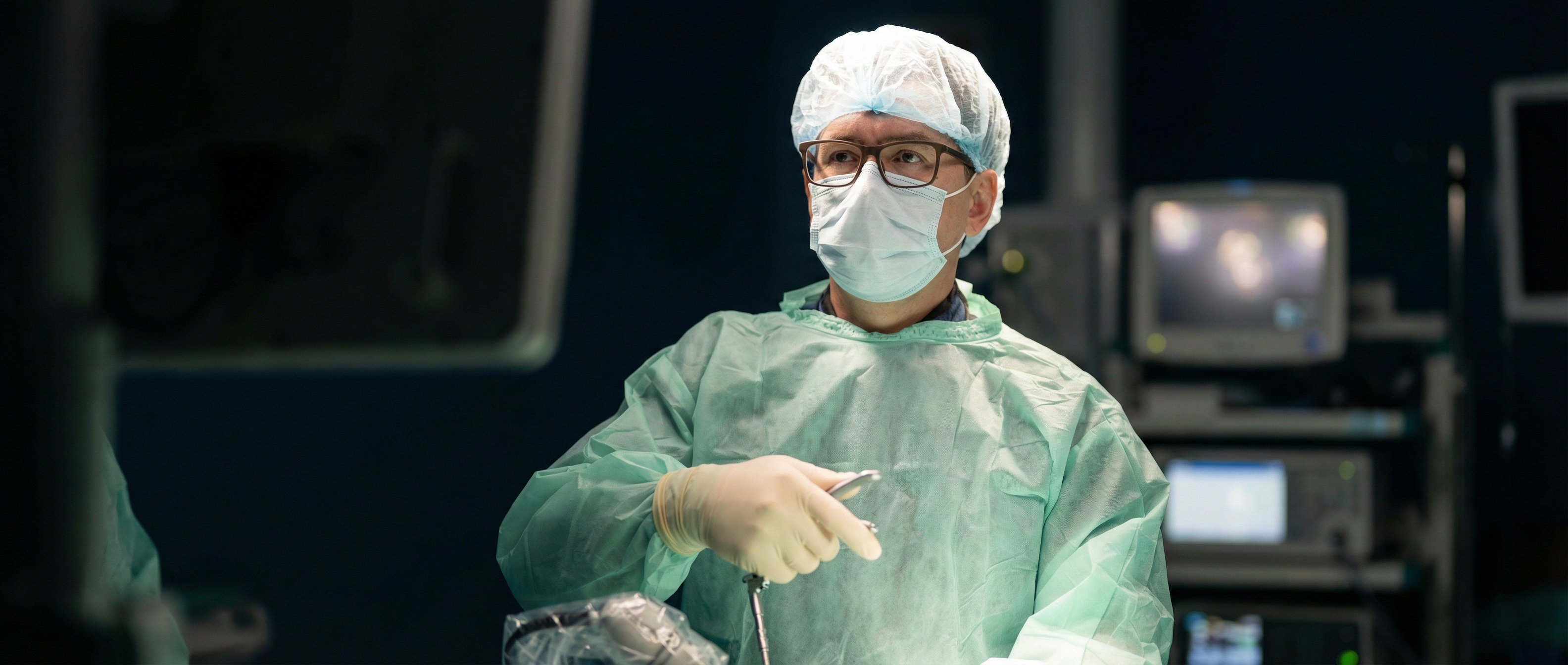
Endoscopic-first, not endoscopic-only
Consultations focus on full endoscopic spine surgery and other minimally invasive options while keeping non-operative care, microsurgery, and open surgery visible when they fit the case better.
Full endoscopic spine surgery in Tashkent, Uzbekistan
Private consultation in Tashkent for patients seeking careful evaluation of full endoscopic spine surgery, minimally invasive options, and second opinions.
The website is written for patients who want clear education, conservative claims, and realistic discussion of when endoscopic treatment may or may not be appropriate.
Patients from Uzbekistan, Kazakhstan, Kyrgyzstan, Tajikistan, and the UAE can start with remote imaging review before deciding whether travel to Tashkent is the right next step.
Japan + USA
International fellowship experience
3 core languages
Uzbek, Russian, and English for day-to-day patient communication
Since 2021
Associate Professor role in medical education
Why patients contact the practice
Remote review before travel
Imaging, symptoms, and prior treatment can be reviewed first so patients do not commit to travel before the case is screened.
Second opinions are welcome
Consultations can compare endoscopic treatment, other surgical approaches, and non-operative options when a decision is still unclear.
Multilingual communication
The site and intake flow are structured for patients who need a clear plan in Uzbek, Russian, or English.
Direct consultation contact
+998 90 808 5509
duschanov@gmail.com
Why patients choose this site
From first message to consultation planning, the site is built to reduce uncertainty without making outcome promises.
Consultations focus on full endoscopic spine surgery and other minimally invasive options while keeping non-operative care, microsurgery, and open surgery visible when they fit the case better.
Patients receive a practical review of symptoms, imaging, and neurological findings before being told whether travel to Tashkent is reasonable to consider.
The consultation path is designed for patients in Uzbekistan, Kazakhstan, Kyrgyzstan, Tajikistan, and the UAE who want remote imaging review before arranging travel.
Services
The practice is positioned around full endoscopic spine surgery in Tashkent while still keeping second opinions and alternative pathways visible.
Evaluation and treatment planning for lumbar disc herniation using full endoscopic techniques when anatomy and symptoms are a good fit.
Minimally invasive decompression pathways for selected cases of spinal canal or foraminal narrowing, guided by symptoms, imaging, and neurological findings.
Independent review for patients who want a clearer decision between conservative care, endoscopic treatment, microsurgery, or more traditional open approaches.
Support for international patients who need a practical plan for consultations, imaging transfer, scheduling, travel timing, and early follow-up after returning home.
Regional access
Regional intent matters for both SEO and patient trust, so the site speaks directly to common travel and referral patterns.
Patients in Tashkent and other cities such as Samarkand, Bukhara, Fergana, Andijan, and Namangan can start with direct contact or a remote imaging review.
Patients from Kazakhstan, Kyrgyzstan, and Tajikistan can share MRI or CT studies before planning travel, which helps reduce unnecessary trips.
For patients traveling from the UAE or other international locations, the goal is to clarify suitability and timing before flights, hotel bookings, or family arrangements are made.
Journey
Patients often need a process that starts remotely, narrows suitability quickly, and reduces uncertainty before arriving in Tashkent.
Send MRI or CT reports, your main symptoms, prior treatment history, and any urgent neurological changes through the consultation form.
The team reviews whether full endoscopic spine surgery may be appropriate or whether another pathway, including non-operative care, should be discussed first.
Patients coming to Tashkent receive a practical schedule for consultation, procedure, hospital stay expectations, and family coordination.
Follow-up is organized with wound updates, recovery checkpoints, and remote review of progress once you return home.
Keep exploring
The strongest conversion path is often an educated patient, so the site now links deeper into the pages that support decision-making.
See which spine problems and second-opinion questions are commonly reviewed.
Open pageLearn how remote review, travel planning, and early follow-up are organized.
Open pageRead the training background, languages, and clinical focus behind the practice.
Open pageFrequently asked
Answers stay conservative so the next step is a consultation, not a promise.
Suitability depends on symptoms, neurological findings, imaging, prior treatment history, and the specific spinal level involved. Some patients are better served with non-operative care or another surgical technique.
Yes. Patients from Uzbekistan, Kazakhstan, Kyrgyzstan, Tajikistan, the UAE, and other locations can share imaging remotely before deciding whether travel to Tashkent makes sense.
The most useful first step is a short symptom summary, prior treatment history, and recent MRI or CT reports if you have them. This helps the team decide what type of review is appropriate.
No. The consultation may also cover conservative care, injections, observation, or the need for another specialist if endoscopic surgery is not a good fit.
No. The site is written for education and consultation intake. Final treatment decisions depend on in-person evaluation, imaging review, and clinical judgment.